
Kiri Avelar Presented at Latin American and Caribbean Digital Humanities Symposium
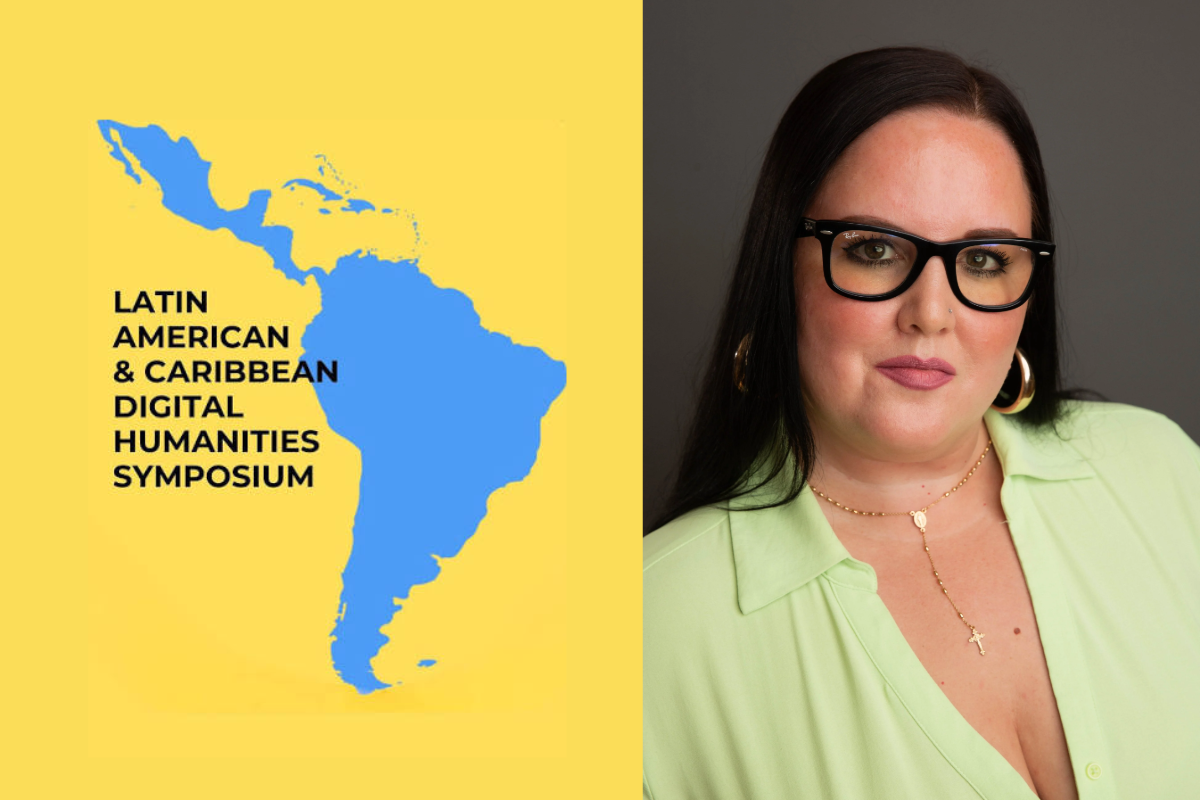
School of Dance Assistant Professor Kiri Avelar presented her research, "The (Dancing) Archives of the Chicano Movement," at the Latin American and Caribbean Digital Humanities Symposium at the University of Texas at San Antonio.
Abstract:
This paper examines dance as an embodied archive and transborder "third space" within the cultural and educational infrastructures of the Chicano Movement. Drawing on archival research, autohistoria- teoría, Chicana feminist performance analysis, and decolonial digital mapping, I argue that movement practices functioned as mobile, relational sites of historical knowledge production that exceeded institutional documentation.
Focusing on organizations such as Ballet Chicano de Aztlán and El Teatro Campesino, I trace how dance circulated through community colleges, churches, union halls, schools, and public spaces across the U.S.-Mexico borderlands and beyond. These sites operated as pedagogical borderlands where cultural memory, political consciousness, and embodied learning were cultivated collectively. Rather than treating dance as a supplemental cultural form, this project positions movement as an infrastructure through which El Movimiento sustained its educational and political labor. Methodologically, the paper employs SIGuache (Fernández et al. 2024), a decolonial cartographic framework grounded in rasquachismo, alongside Google My Maps to visualize dispersed networks of performance, training, and circulation. These tools are used not as neutral technologies, but as situated practices shaped by community knowledge, affective space, and historical inequities. By reading programs, flyers, photographs, and oral testimony as choreographic traces and mapping their spatial relationships, I foreground how absence, fragmentation, and mediation shape what becomes legible in the archive.
Framing digital mapping as a decolonial practice informed by borderlands epistemologies, this paper proposes the archive itself as a third space-where embodied knowledge, personal memory, and digital visualization intersect. In doing so, it contributes to transborder digital humanities scholarship by centering movement as both historical argument and methodological intervention.