

from Even This Was Written, choreographed by Kara Robertson. Photo by Todd Collins.
written by Michelle Manzanales
published November 20, 2025
In Where Edges Blur, boundaries between dance, theatre, film, technology, and sound dissolve into an immersive field of experimentation. Presented as the culminating thesis concert for graduate students in the University of Utah’s School of Dance, the run invited audiences to witness four artists exploring ideas of what dance can be. Each work reflects the culmination of rigorous research and creative risk-taking, embodying the program’s ethos of inquiry through movement. What unfolds is not merely a performance but a collective meditation on healing, hybridity, identity, and the porous edges where art forms meet.
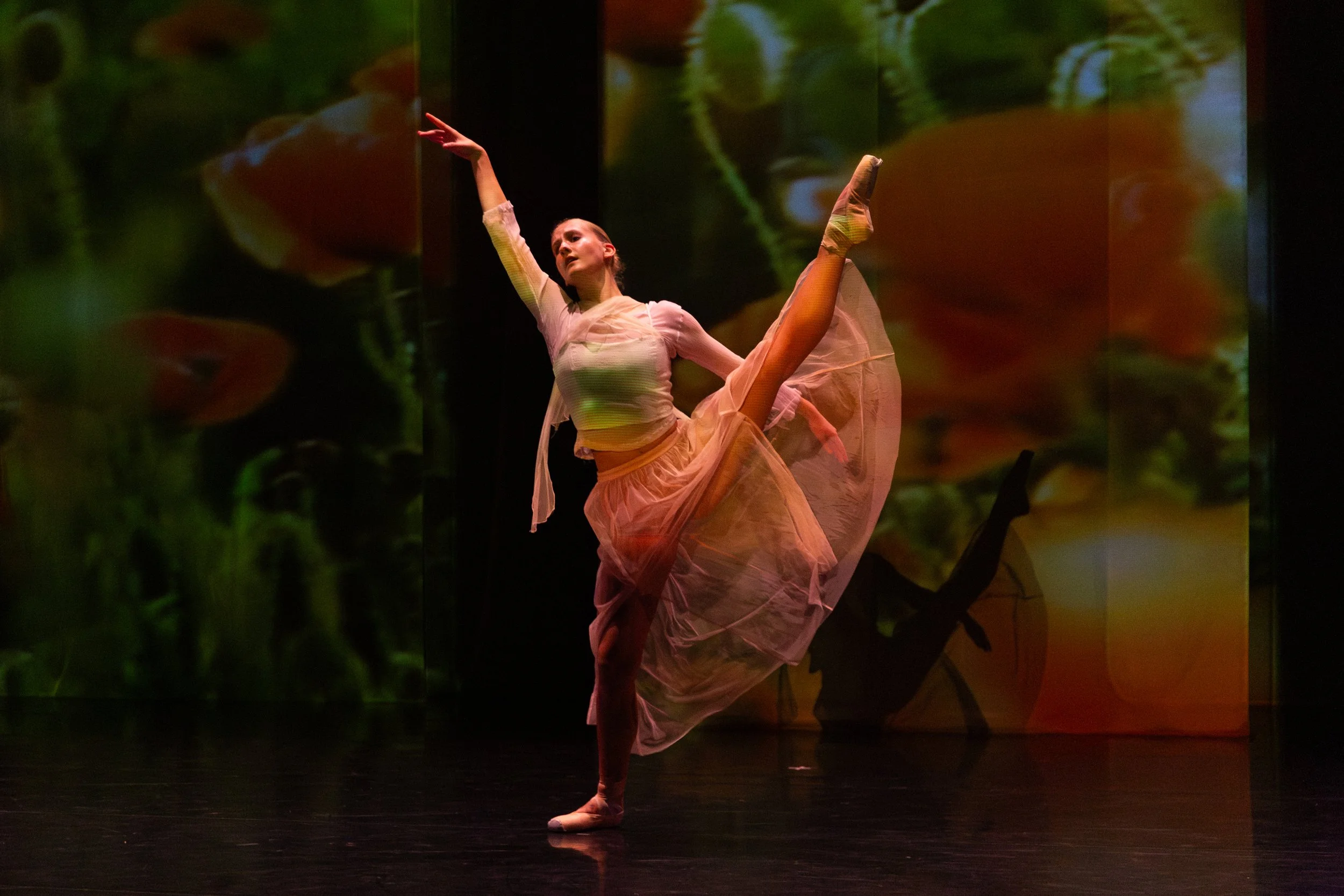
from Even This Was Written, choreographed by Kara Robertson. Photo by Todd Collins.
Kara Robertson’s Even This Was Written opens the evening with an invitation to slow down, to breathe, and to step gently into another world. Five large fabric panels hang across the stage, transforming into living canvases that project various aspects of nature, forming a living backdrop that deepens the sense of entering a dreamlike realm. The audience is drawn into a dancescape of calm introspection as the dancers traverse this space with quiet, resilient grace. The contrast of movement aesthetics, with some dancers on pointe and others in bare feet, reflects the work’s blend of ballet and contemporary dance influences, a merging of grounded and elevated movement qualities.
Accompanied by the choral austerity of Arvo Pärt and the textured soundscapes of Maarja Nuut and Ruum, the choreography unfolds in meditative chapters. In her choreographer’s note, Robertson asks, “When chaos is inherited, how do we choose calm?” The answer arrived in the stillness between movements, in the softness that persisted amid flux. “I’m realizing more and more that world-building is central to my work,” she shared. “I want audiences to be transported, to find their own connection inside that world.” And transported we were, to a realm both intimate and vast.
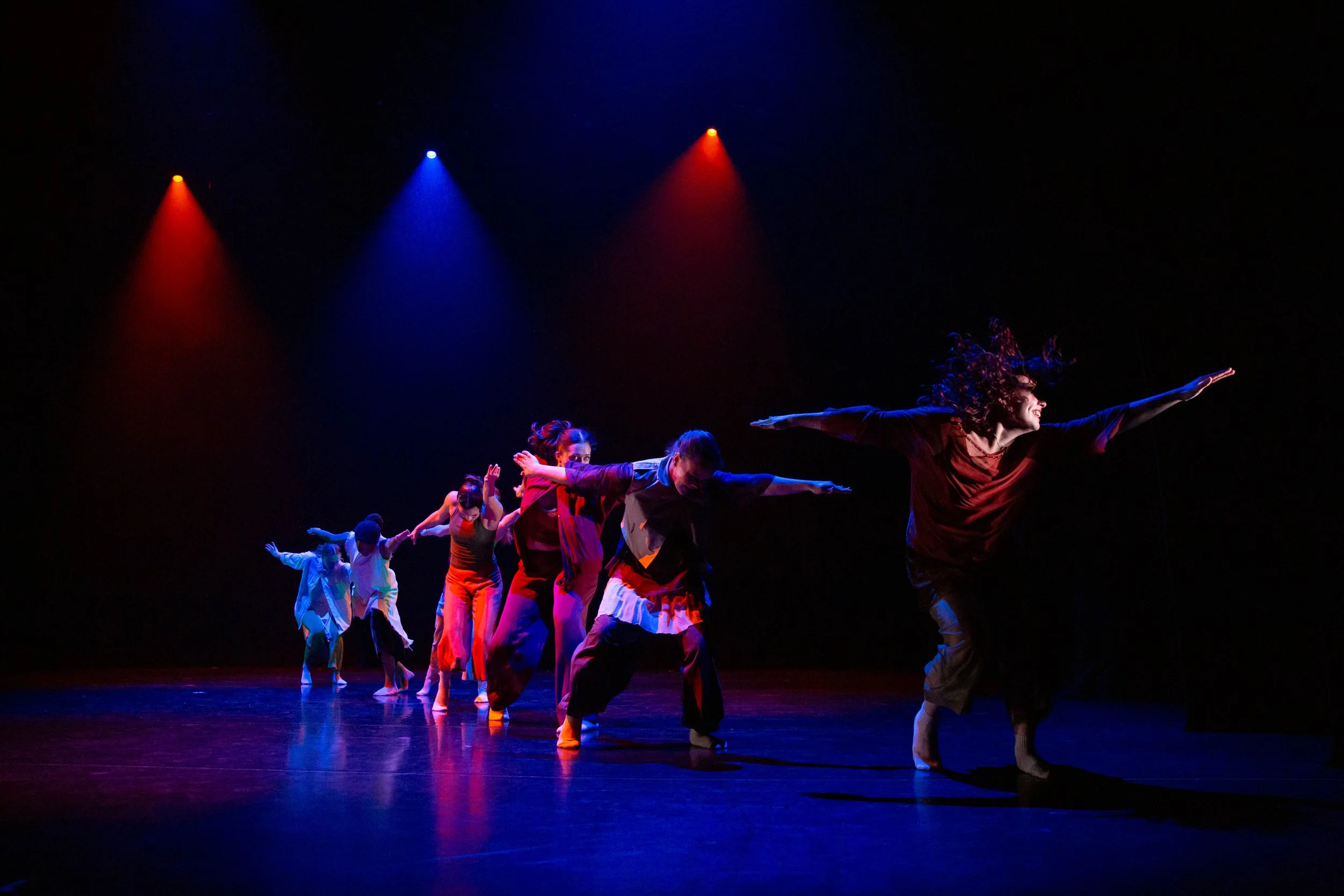
from Hybrid House, choreographed by Ruger Memmott. Photo by Todd Collins.
Where Robertson’s world breathes serenity, Ruger Memmott’s Hybrid House bursts open with kinetic energy. It is a vivid collision of rhythm, dance style, and personality, a house of movement built from many rooms. Drawing from his competition dance background in ballroom, contemporary, jazz, and hip hop, Memmott constructs a kinetic collage that celebrates hybridity and joy within the dancing body. The cast attacked the movement vocabulary with sharp precision and unwavering drive, embodying the tension between structure and release. As tables and chairs were rearranged across the stage, a literal and metaphorical house took shape and fell apart again, an image of belonging continually redefined.
“I never felt I could specialize,” Memmott said. “I’m most at home being a generalist, someone who lives between genres.” That spirit electrified the work. Set to music ranging from Philip Glass’s String Quartet No. 2 “Company” to Crystal Waters’s Gypsy Woman (She’s Homeless), Hybrid House fused classical lines with club energy. Costumes co-designed by the cast underscored individuality and freedom, while lighting by Memmott and William Peterson carved the space into dynamic frames. Hybrid House stands as both declaration and experiment. “It became about finding home as an artist,” Memmott explains, “how these different parts of myself fit together.” In that way, Hybrid House is less about fusion and more about belonging, a world built on rhythm, curiosity, and the joy of unapologetic hybridity.
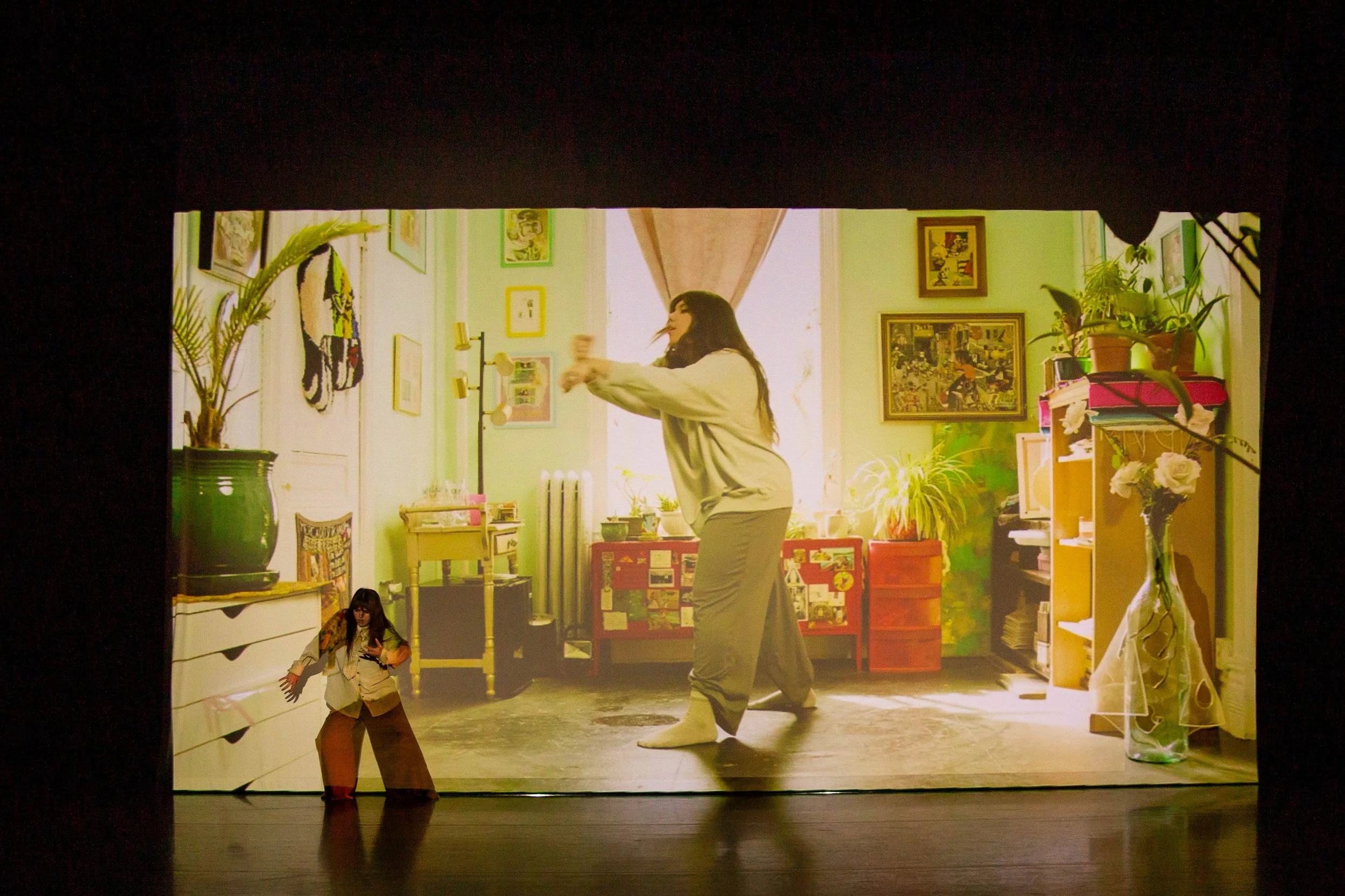
from where we were | have been | will be, choreographed by Soph Cardinal. Photo by Todd Collins.
The tone shifts once more in Soph Cardinal’s where we were | have been | will be, a deeply personal work of reflection, resilience, and transformation. A work of quiet power and luminous vulnerability, it comes to life less than a year after Cardinal’s recovery from a life-threatening stroke. The piece arises from an intimate dialogue between healing and identity. Masterfully blending live performance and screendance, it unfolds through projected imagery on multiple surfaces, including the cyclorama, a mid-stage screen that lowers and rises like a heartbeat, a painted work of art created on fabric, and the dancers themselves, pulling the audience into a world that transcends through time.
Fabric served as a central metaphor, first blank, then painted, then worn. By the final moment, a vast hand-painted cloth filled with personal symbols and color was lifted and reshaped by all the dancers, a collective act of carrying and release. Cardinal’s soundscape, built from hospital monitor beeps, original compositions, and recorded voicemails, grounded the work in haunting intimacy. “We were exploring three states of being, past, present, future,” they said. “It became about how memory lives in the body.” What emerged was a tender world where time, identity, and movement converged, a living portrait of resilience in process.
Through repetition, a concept Cardinal links to Judith Butler’s ideas of performativity, the dancers embody the continuous act of self-realization. The movement exists in a liminal state, balancing fragility with fierce presence. This is not merely a dance about healing, it is healing, embodied. Cardinal constructs another world, one suspended in time, where art becomes an act of survival and where movement writes what language cannot.
Closing the evening, Alexia Maikidou Poutrino’s (a)similar fuses dance and theatre into a witty, thought-provoking study of communication and translation. Rooted in her dual training in theatre and dance and informed by a multilingual upbringing, Maikidou Poutrino's process began not with fixed choreography but with listening. She read texts aloud, sometimes in Greek, sometimes in English, sometimes pure gibberish, and invited the dancers to respond through movement. Over time, they developed an embodied vocabulary for rhythm, pitch, tone, and timbre, transforming language into motion.
This exploration of what Maikidou Poutrino calls “the musicality of language” led her to Eugène Ionesco’s The Bald Soprano, a play of circular absurdities and collapsing meaning. Excerpts from the script, along with gibberish poems in multiple languages, form the sonic backbone of the piece. Onstage, two performers engage in an increasingly fragmented conversation while other dancers echo their vocal inflections, turning syllables into gestures, pauses into suspensions, and laughter into rhythm. As the work unfolds, recognizable speech dissolves into a cluster of overlapping voices, a deconstruction of language itself.
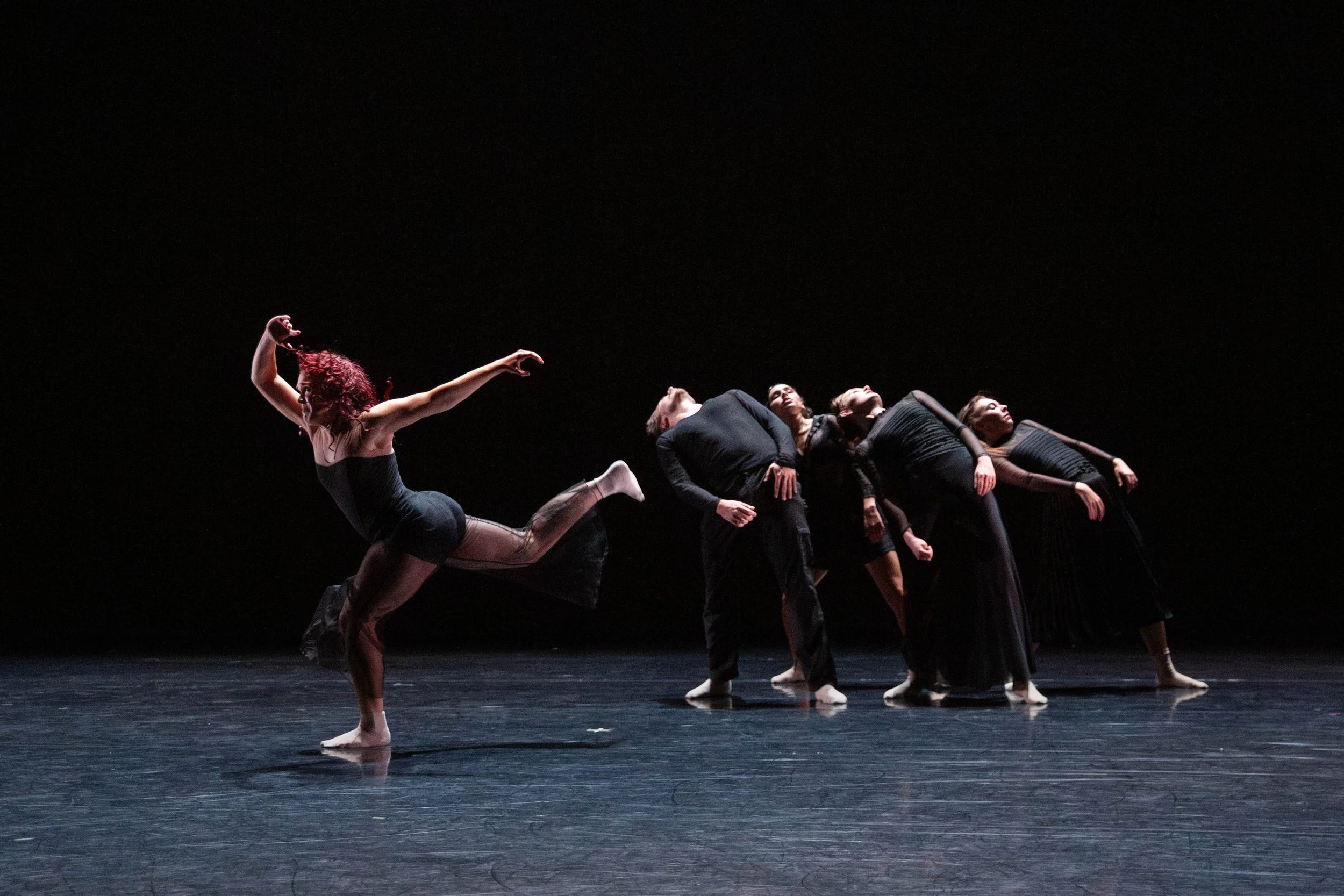
from (a)similar, choreographed by Alexia Maikidou Poutrino. Photo by Todd Collins.
For Maikidou Poutrino, this dismantling is not chaos but liberation. “I want the audience to stop paying attention to the words,” she explains, “and start hearing the language as music.” The dancers, costumed in a palette that shifts from color to black, mirror the arc of the work’s deconstruction, from sense to sound, from dialogue to pure movement. What emerges is both playful and cerebral: a dance-theatre world where the body becomes the instrument of speech, and speech itself becomes dance.
(a)similar embodies Maikidou Poutrino's distinct choreographic voice, one shaped by her Greek and Italian heritage and her fascination with linguistic identity. It invites viewers not only to hear differently but to feel differently, to perceive the pulse beneath the noise. As one audience member reflected, “It was like watching vocal cords come to life.” Maikidou Poutrino's dream is just that: to move audiences beyond comprehension into resonance, to remind us that meaning lives not only in words but in the breath, rhythm, and vibration that carry them.
Across the evening, Robertson, Memmott, Cardinal, and Maikidou Poutrino's revealed the depth of imagination thriving within the University of Utah’s MFA in Modern Dance program. Each built a world from their research, their stories, and their questions, distinct in tone yet unified in purpose. Together, their works formed a constellation of inquiries into what dance can hold and how it can connect.