
Celebrate Hispanic/Latinx Heritage Month at the School of Dance

Student Group Raíces en Movimiento: Celebrating Latinx Culture(s) at the U – Dance
This month, as you walk into the Marriott Center for Dance’s light-filled lobby, you will be greeted by festive, colorful papel picado strung throughout the hall, indicating a celebration—because this month (specifically, from September 15 – October 15), the University of Utah School of Dance celebrates Hispanic/Latinx Heritage Month.
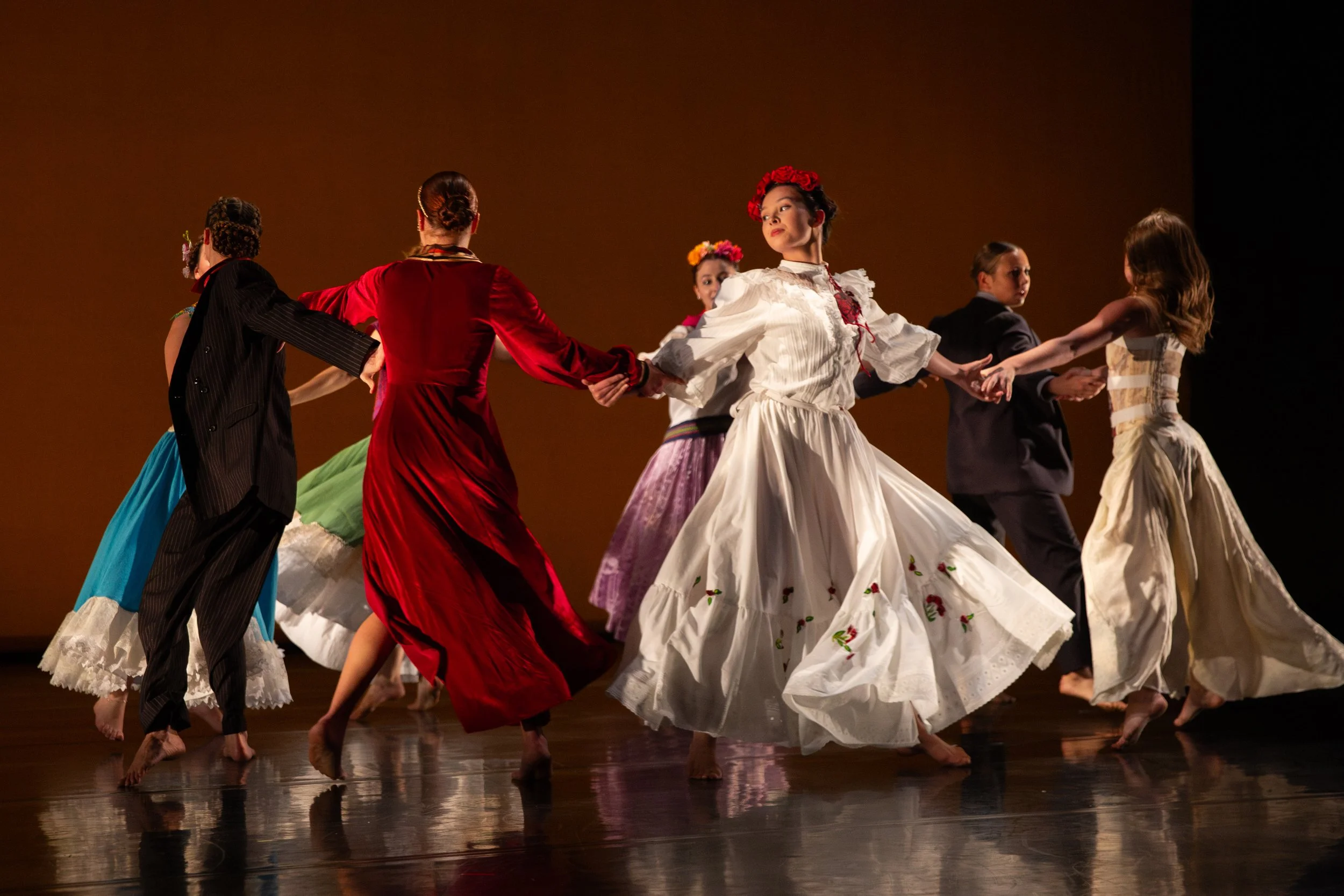
“Paloma Querida,” choreographed by Michelle Manzanales, in the “Latinx Heritage Celebration” concert
Though this is just the second year this heritage month has been officially observed by the SOD, the observances are robust and widespread. Through the jubilation, students are discovering both the strength of dance lineages gone before, and the power of their own voices to make change.
Last year, in 2025, this new tradition burst into the community via the “Latinx Heritage Celebration” concert and its accompanying exhibition titled “Half a Century in Motion: Honoring Chicanx Dance, Art, and Activism.” The concert featured four pieces by Chicana, Latinx, and Latin American choreographers, and the exhibition featured original research by students and faculty across campus.
“I was deeply moved by this concert and the accompanying exhibition,” former UofU trustee Maria Garciaz told "Studio" magazine. “Experiencing fifty years of the Chicano and Latinx journey expressed so boldly on stage and thoughtfully curated in the exhibit was profoundly inspiring. I saw myself reflected in the timeline and in the performances — in the resilience, the pride, and the evolution of our community.”
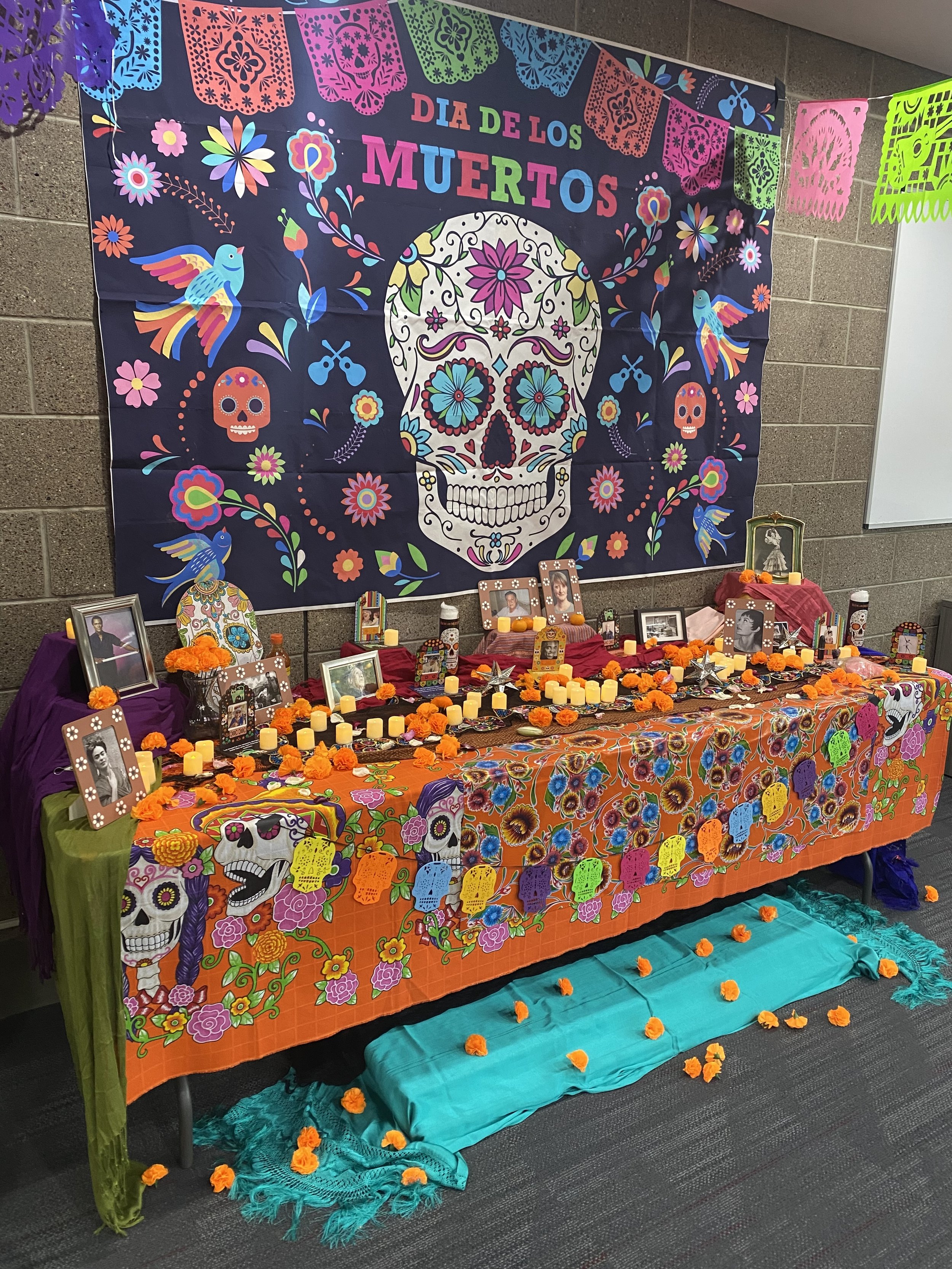
The 2025 School of Dance Día de los Muertos altar
Garciaz was not the only person moved by the concert and exhibition. In fact, students in the School of Dance began to come together to keep the celebration going. A group of students organized an altar for Día de los Muertos shortly after the concert run and then continued to work together to create something more permanent.
This year their group, called Raíces en Movimiento: Celebrating Latinx Culture(s) at the U – Dance, had its inaugural event on September 15, the first day of Hispanic Heritage Month. (Those interested in joining the group are encouraged to reach out to the student leaders: Michelle Manzanales, Isabella Nieves, and Giovanna Harris.) Amongst other events, they will again be creating an altar for Día de los Muertos which will be on display in the Marriott Center for Dance from October 27 through Thanksgiving break.
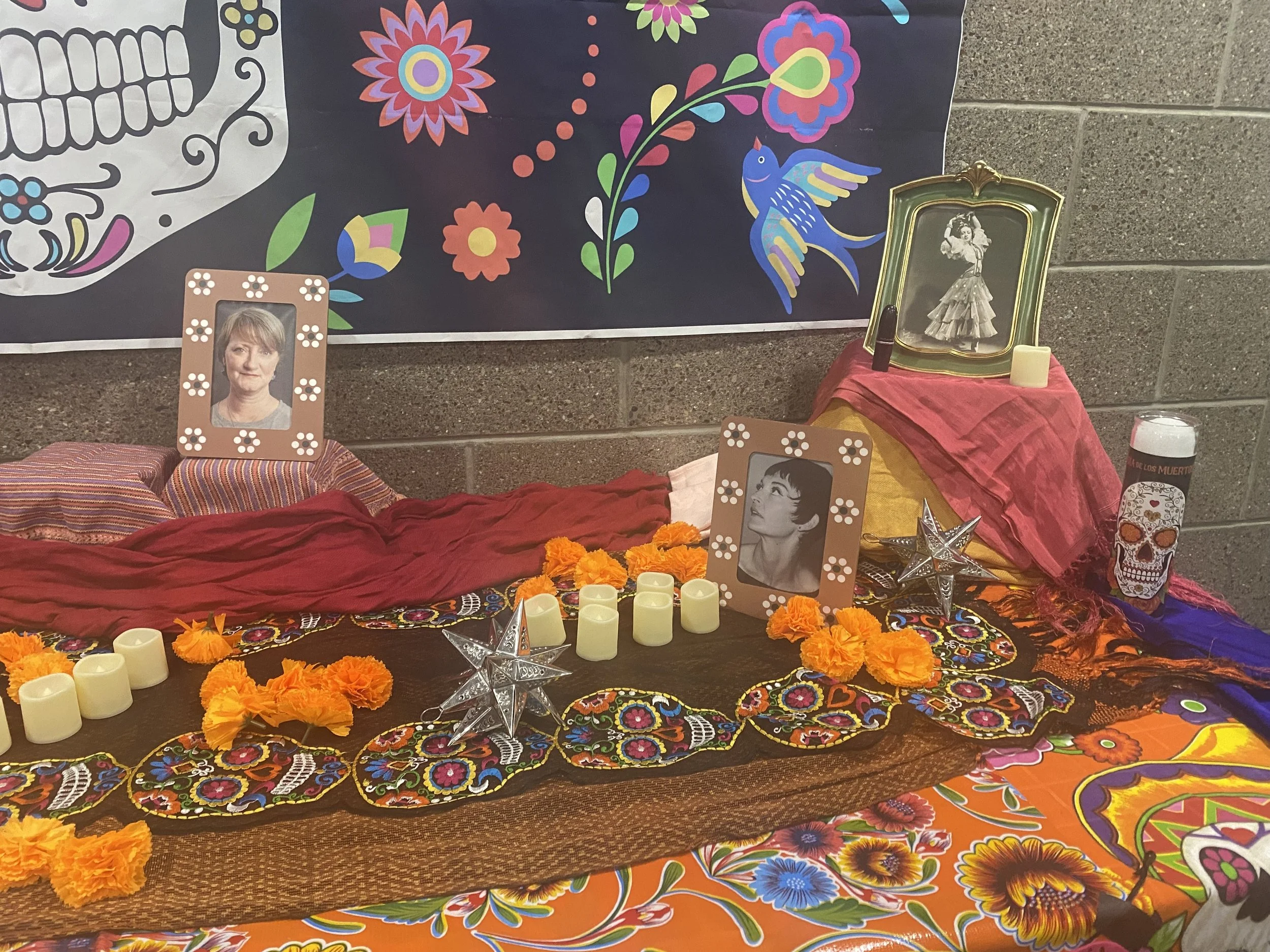
The 2025 School of Dance Día de los Muertos altar, featuring photos of Maggie Tesch, Shirley Ririe, and Tina Ramírez
But this is far from the only way the School of Dance is celebrating Latinx heritage. In “Unbound,” the first concert of their 2026-27 performance season, two of the pieces honor that rich history.
First, through a Dee Grant and collaboration between Associate Professor Natalie Desch, the School of Dance, and UtahPresents, School of Dance students have had the opportunity to learn and perform the work of José Limón, the Mexican-American choreographer whose work was foundational in the modern dance movement. Under Desch’s direction, students have learned an excerpt from Limón’s “Psalm,” which they will perform in Unbound. Students were also able to perform alongside the Limón Dance Company in their concert for UtahPresents at Kingsbury Hall.
Second, the School of Dance is hosting Sandra Rivera as guest artist as she recreates her piece “Para Tina Ramírez” on students, which is an homage to Tina Ramírez, founder of Ballet Hispánico (of which Rivera is also a founding member).
Assistant Professor Kiri Avelar, who is one of the rehearsal directors for “Para Tina Ramírez” in “Unbound,” emphasized the importance of Rivera’s UofU Dance residency. “The significance of passing on historical knowledge through the body, things that are not written down or documented in those particular ways but are given a cultural legacy and connected to a historical moment,” she said. “What does it mean for our students to inherit some of that legacy?”
Rivera’s work as both an artist and educator also examines the legacy of her Puerto Rican heritage and Spanish dance as a diasporic art form—in fact, in the piece, students will be performing with fans and castanets. Rivera wrote “Spanish Dance in the Puerto Rican Community,” for “Dance Index” in 2021, which examines her lived experience studying with Tina Ramírez and dancing in Ballet Hispánico. Rivera has also embodied this through her teaching, for which she was awarded a Lifetime Achievement award from the National Dance Education Organization. (You can learn more about Rivera through the oral history collected by Avelar, which is accessible through the New York Public Library.)
Students are not only learning through dancing, but through scholarship—and are sharing that scholarship through the exhibition “Latinx Artists: Mapping Silenced Legacies.” This digital exhibition is accessible via posters in the Marriott Center for Dance, Utah Valley University, and Weber State University, which will be on display through October 15.
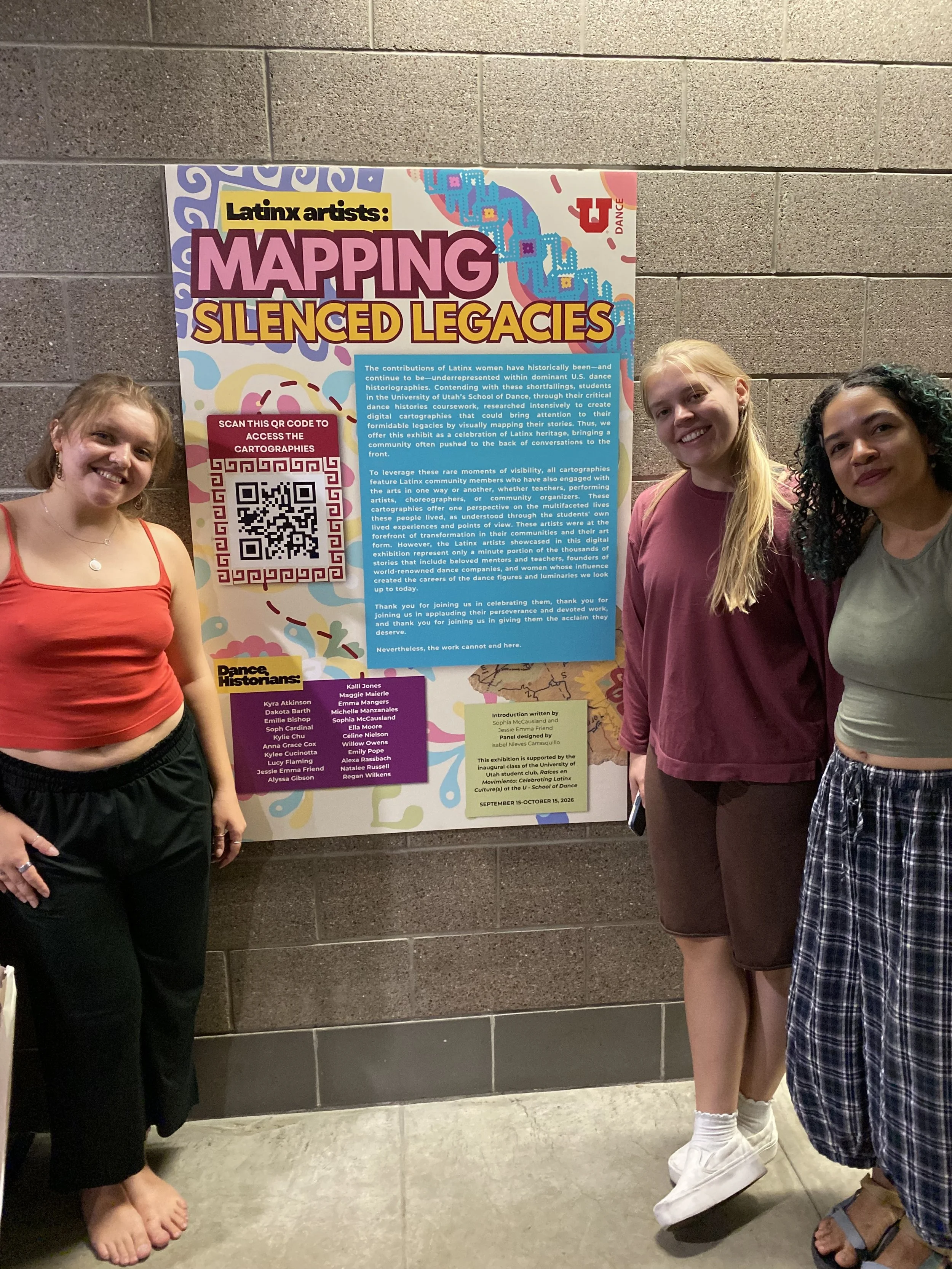
Jessie Emma Friend, Dakota Barth, and Sophia McCausland standing in front of the poster for “Latinx Artists: Mapping Silenced Legacies”
“Through interactive digital cartographies, the exhibition brings attention to the lives, artistry, and legacies of Latinx women whose contributions have shaped dance histories and communities,” said Avelar, who curated the exhibition.
Avelar was delighted at the enthusiasm her students showed for developing these histories, which were created in one of her classes last spring semester. “The students are seeing the possibility of research,” she said, “and that they can make a difference.”
Her sentiments ring true throughout all the Hispanic Heritage Month events here at the School of Dance—and you are invited to join in. You can attend Unbound October 1 – 10 at the Marriott Center for Dance (information and tickets here) and can view the “Latinx Artists: Mapping Silenced Legacies” exhibit via the QR codes in the building during open hours. We hope to see you there.